Cooking
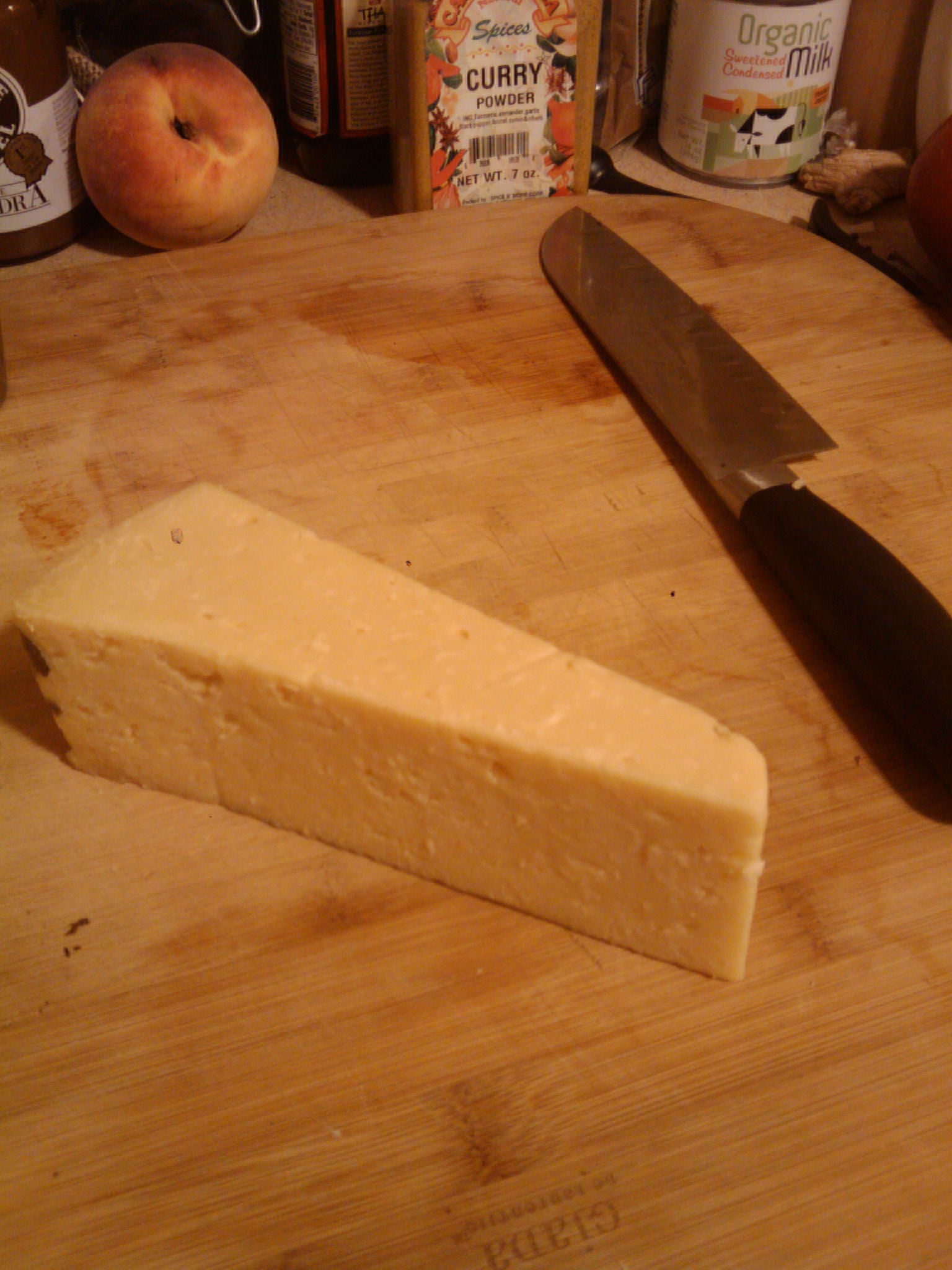
Asiago Stella
Ah cheese. Â It’s been way to long since I wrote about a new cheese. Â On my train ride home today I decided to change that.
My main goal was to find something I could put on a salad.  I stopped by Union Market and scanned maybe 10 varieties of  blue… not what I was in the mood for tonight.  Then I found something that I hadn’t seen before:  Asiago Stella.  (Well I’ve seen Asiago cheese, but it was always hard as rock or dust, not like the softer, moist looking block before me.)  I wasn’t sure about it, but, when I realized that it was about half the price of most of the others, I decided I had to give it a try.
It actual turned out to not be great for eating on its own–a little bit dense and a little mild. Â But it was prefect on the salad. Â It has a some what savory nutty flavor and when cut into about quarter inch cube it add a nice dimension of flavor to a salad with some amazing little heirloom tomatoes, some cucumber, and a bit of carrot (all from a co-worker’s CSA).
Something strange happened to me yesterday morning–something that hasn’t happened in months: on my walk to the subway I stopped in to my usual coffee shop and realized I wanted a hot not an iced coffee. Fall was in the air. After about 36 hours of constant rain, the air was cool and damp.  The oppressive heat and humidity seem to have passed.
Still, I’m sure the summer and fall have more than a couple iced coffee mornings left in them; which means that I need to get back to making my own.  With the transition back into work life, I’ve been full of excuses about how busy I am in the morning.  Sure making regular coffee takes a minute and I might actually have an excuse there.  But making your own iced coffee is really so easy I don’t have one for not doing it myself.’
How to Make Iced Coffee:
The hard way to make iced coffee is to make regular coffee and put it in the fridge.  The easy way to make the stuff is to grind some beans (about two grinders’ worth of grounds) put them in a pitcher with some cool water and let it sit over night in the fridge.  That’s it.  Under the easy way, after 12 hours the coffee is a little weak, but each day you let it sit the flavor builds.  In general, I prefer the flavor of the easy way–a little less bitter.
Now all you need is a travel mug full of ice and a little simple syrup and you’re good to start your day. The time? Less than the wait at the coffee shop.
You can use sugar instead of simple syrup, but because the coffee is cold the sugar doesn’t like to dissolve and it will make the iced beverage grainy.  And making your own simple syrup is, well, simple.
How to Make Simple Syrup:
 You need only two ingredients: sugar and water.  Put the water in a pot on the stove, heat to just below any simmering or bubbling, and then add some sugar, stir until the sugar dissolves, and repeat until the water doesn’t seem to be taking any more (e.g. the sugar isn’t dissolving any more).  [Or just use the two parts sugar to one part water ratio Rick points out in the comments.]  Find a bottle to put the sweet stuff in and that’s it.  I used an old, well rinsed, scotch bottle myself.
I haven’t done the actual math, but iced coffee always seems to be insanely expensive—it’s time to enjoy some savings along with the last of the warm weather.
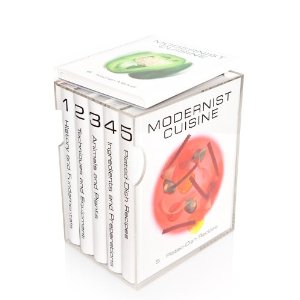 I don’t normally post links here.  But I’m making an exception.  The link below shows the true fun that can be found in molecular gastronomy–in opposition to those who see the field as sucking the warmth and love out of cooking.
For those of you new to the term, molecular gastronomy is basically using science to break the rules of what cooking is intuitively; for example room temperature ice cream that has no cream.
Earlier this year, Nathan Myhrvold put out the Modernist Cuisine, a 5 volume, 40 lbs tome of molecular gastronomy.  In the link, the blogger conjures images from Charlie and the Chocolate Factory.
Enjoy: Â http://kottke.org/11/04/willy-wonka-molecular-gastronomist
(Oh, and yes, at a mere $625, the Modernist Cuisine is on my Christmas list.)
The long furlough is over and we are back at it. Our apologies for the delay, Arthur was studying for the Bar Exam and I was in the middle of changing jobs and apartments. Now that these things are out of the way, we’re hoping that we can once again get into a regular rhythm of new recipes and restaurant reviews.
I’m happy to say that my new residence is far more conducive to culinary advenutures and the documentation thereof. The kitchen is much bigger, the stove /oven is much better and I also moved in the with my buddy Tyler, whom our readers may remember from the Lasagna Files. I’m sure some of Tyler’s own cooking experiments will be featured at some point, as he has some nifty recipes of his own like soy-pickled jalapenos, pickled northern pike, creamed cucumbers and other things.

Those serial killer eyes hide some culinary inspiration.
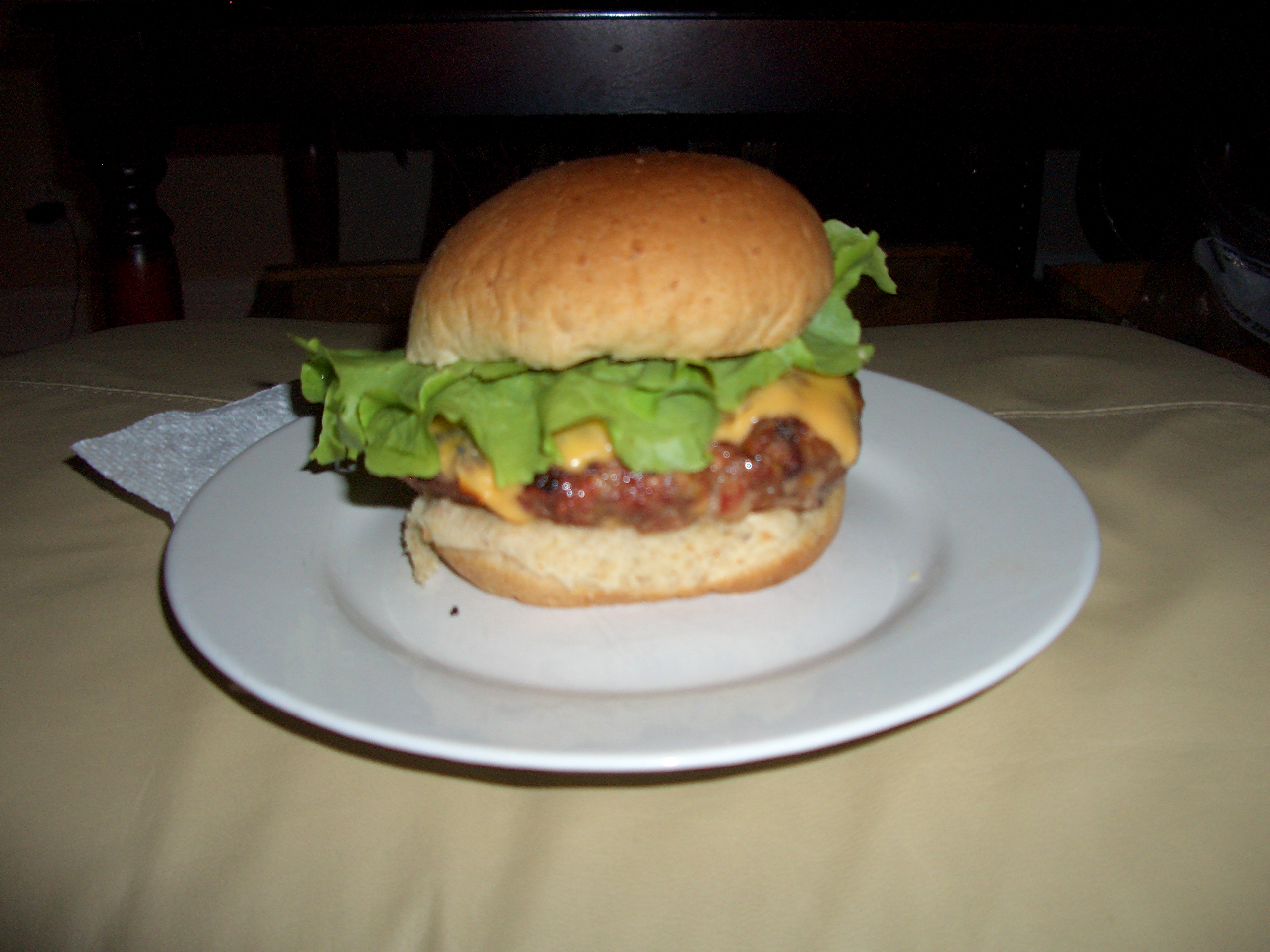
Today’s recipe was inspired by two things. First, my new place has a grill, something I’ve been missing for the last year. Second, we were in the middle of a horrid heat wave at the time. With temperatures hovering around 95-100 with outrageous humidity, we were doing our very best to not do any cooking inside. Thus were born the cheddar-bacon cheeseburgers.  And because that sounds a bit too simple, we’re gonna go for internal cheddar and bacon. You’ll need:
- 1.5 lbs of ground beef
- 3 strips of thick cut bacon, chopped
- 1/2 cup of shredded cheese, like a sharp or smoked cheddar
- 3 large cloves of minced garlic
- 3-4 dashes of Worcester sauce
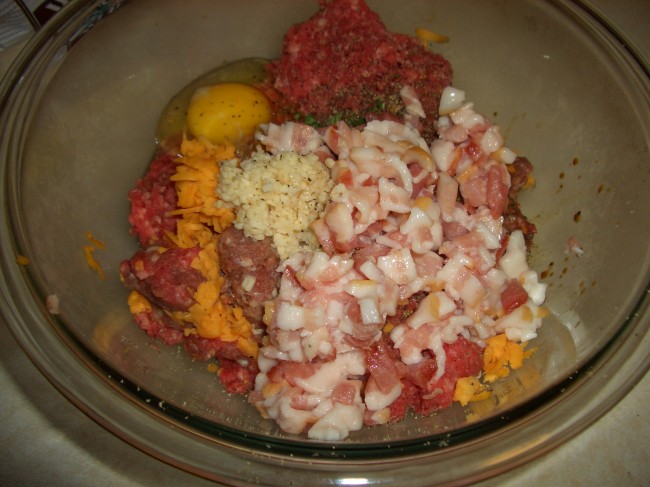
Get your hands in there and make some burgers!
- 1 egg
- American cheese slices
- Salt and pepper to taste
- Maybe a little something else. I threw in a bit of minced oregano and rosemary, mainly because we have a huge herb garden outside the back door. Chili pepper flakes would not be a bad idea either.
Mix all of that together with your hands, then separate and form the patties. We got 5 burgers out of the batch, and they seemed to be a good size. Throw them on the grill for a few minutes per side. Because these burgers have raw pork in them I cooked them a little more than the medium/medium-rare I usually prefer. By the time I took them off  the grill there was almost no pink in them, but because of the bacon the burgers were still incredibly juicy. Add the (fake) cheese slices  about a minute before you take the burgers off the grill, then let them rest post-grilling for a few minutes before eating. Top your burger with whatever you normally prefer. Unless that happens to be mayo; don’t do that to any burger.
P.S. FOOTBALL SEASON IS RIGHT AROUND THE GODDAMN CORNER! Its a cruel irony how much football makes me look forward to the end of the summer. 
Especially when this pantload is no longer whiffing blocks all game long. Anyways, we’ll have some more great appetizers and grazing food here on ECL once the season officially starts, including beer-cheese dip and fresh spring rolls with jalapeno syrup dipping sauce!
It’s been a while, a long while, since I last posted. A difficult break-up, followed by finals, followed by studying for the bar kept me out of the kitchen and off the blog. The last few months have been arduous.
I sat for the last day of the bar exam on July 27 and on the 28th began my return to the real world.  But, when I tried to get back on ECL on the 29th I found an unfortunate “Fatal Error†message. After only a few hours of work behind the scenes I was able to break the blog even more—no contact with the server. But today, I final got everything back up and running.  I had no idea when I started this thing that I would learn so much about computers.
Last Saturday, for the first Saturday in recent memory, I woke-up and didn’t open a bar study book. Instead I grabbed an ice coffee and made the mile and a half walk to the farmers market for the first time this summer. I went from stand to stand looking at all the green, red, yellow, and orange delights. But I had a mission: caprese and pesto.
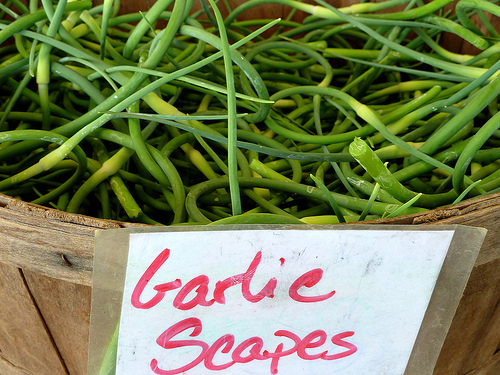
I found a huge plant of basil for only $3. I say plant because it really was still a plant with roots and all. It kills me to think about how much I’ve paid in winter for a handful of sorry looking basil from the supermarket. For the tomatoes in the caprese I got some bright red cherry tomatoes.  Other random finds included some garlic scapes (long shoots that grow out of the head of the garlic) and a head of broccoli. [My apologies for the details on the mundane. What can I say? I’m excited.]
On the way home I picked-up pine nuts from Russo’s Mozzarella and Pasta up the street from me. On the walk home from Russo’s I realized I had forgotten the cheese! So I stopped in a Union Market and picked-up some Parmigiano Reggiano and some amazing mozzarella.
Now when I say this was amazing mozzarella I’m not doing it justice. I didn’t realize when I bought it, but I had gotten Burrata. Burrata is basically cream filled mozzarella. It’s rich, silky, and decadent—like no other cheese I’ve had in my life. Outside is a layer of the familiar fresh mozzarella, inside is a semi-solid pudding like structure. I started cutting the fist size balls to make caprese but quickly turned to tearing with my hands. I then cut the cherry tomatoes in half and cut about a half dozen basil leaves into strips. After mixing it all together with some good olive oil and some coarse sea salt I enjoyed an incredible afternoon snack.
But I can’t forget the pesto. I used the following recipe as a template (it’s almost identical to the one in Loren’s pesto post), but improved it with two more cloves of garlic and about another cup of basil.  Also, make sure you buy actual Parmesan Reggiano and some decent olive oil–the extra few bucks are worth it and can be spread over several batches.
Ingredients:
 2 3 cups fresh basil leaves, packed  [going from 2 to 3 cups made it less runny, which I personally like]- 1/2 cup freshly grated Parmesan Reggiano
- 1/2 cup extra virgin olive oil
- 1/3 cup pine nuts
 3 6-7 medium sized garlic cloves, minced [I needed more garlic, all the vampires in pop-culture today have me worried]- Salt to taste
Instructions:  First, combine the basil with the pine nuts, pulse a few times in a food processor.  Then, add the garlic, pulse a few times more. Next you’re supposed to slowly add the olive oil in a constant stream while the food processor is on.  I only have a miniature Cuisinart Chopper and Grinder. The lid doesn’t have an opening so I had to pulse, add oil, pulse, and oil…. you get the idea. It was a little slower going, but worked great.  Scrape down the sides of the food processor with a rubber spatula and add the grated cheese and pulse again until blended.  Finally, hit it with a pinch of salt to taste and give it one last pulse. When you’re done the whole room will have a wonderful pesto smell and you’ll have enough pesto for a few people.
Oh, and the pesto keeps in the fridge for a few days or the freezer forever—so you don’t need to eat it all right away. This is a good thing, because I made a return to the farmers market yesterday and just made a giant batch.
It’s feels good to be cooking and typing some non-law study words again. There isn’t a lot of summer left, but I plan to make the most of it!  Sometime soon I’m coming back from the farmers market with squash blossoms.

Look for the red steer
I’m going to start this out with something I don’t think I’ve ever said before, and I hope Arty doesn’t revoke my posting privileges for saying it: this recipe might have been better without the bacon. *cringes* It’s not an easy thing to say. Partly because I made it with the BEST BACON EVER! Quick aside:
I was introduced to this bacon at a young age. It comes from a small town around Lake Mille Lacs in northern Minnesota, called Pierz. This bacon is amazing. Inspiring. Life-affirming. You must try it. Don’t believe me? Go check out this write-up in the New York Times. Everything she writes is true, it is the perfect balance of thick and thin, meat and fat, smoky and delicate flavor. My dad and I made a point to make the 40 minute trip once a month to make sure the freezer was always stocked with this manna from heaven. Now the Lund’s in Uptown carries it, although I don’t know how far their distribution has spread outside Minneapolis. Either way, order yourself a pound or ten (they will ship it from the website, I’m pretty sure).
Back to the recipe at hand: the next time I make this, I think I’ll be using pancetta. In this case, the smoke flavor just did not marry well with the white wine/tomato/basil flavoring. Ingredients:
- 4lb fresh mussels, scrubbed and de-bearded
- 1/2lb smoked bacon (I will use pancetta from now on)
- 2-3 medium shallots
- 5 cloves garlic
- 1 bay leaf
- Pinch of red pepper flakes
- Handful of fresh basil leaves
- 1.5 cups white wine
- 1 can (~20 oz) of diced tomatoes
- 1-2 tbsp butter
- Salt and pepper to taste
Brown the bacon in the pot (remember, it has to be big enough to hold all them mussels), then remove it to a plate. Add the sliced shallots and minced garlic to the pan. When the shallots are translucent and before they really brown, add the wine to deglaze the pan, stirring to incorporate the brown bits from the bottom of the pan. Add the tomatoes and juice form the can and let everything simmer on medium-low for about 10 minutes.
Now it’s time to add the mussels. Standard disclaimer when working with bivalves: look for any ones which are open. Tap them or squeeze them a few times; if they don’t close on their own, toss ’em. Add the rest to the pot, shake them around and stick the cover on. Put on the lid and let them steam for about 6 minutes, then check for doneness. Step one is are they all open. If yes, give one a try to see if it’s done correctly. They might need another few minutes, but probably not much more than that. Add in the tablespoon of butter, and chiffonade the basil then stir that in as well. Remember to get a good amount of that wonderful sauce in the bowls with the mussels, and serve some nice crusty bread with dinner to sop it up with. Â Enjoy!
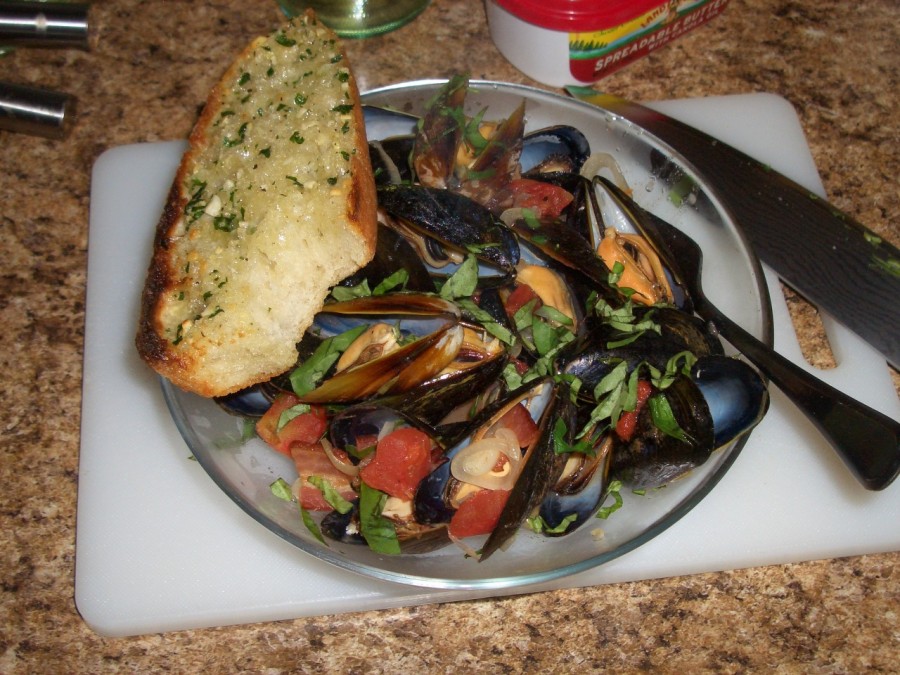
Think I will have to make this again soon...
I’d like to introduce you to a friend named Tyler. I met Tyler roundabout 6 or 7 years ago through a friend of a friend, and we ended up living in a house together while I was in college. Tyler and I are the ultimate example of diametrically opposed forces in the

My favorite pic of Tyler. He doesn't always look quite so deranged.
kitchen. Whereas I ususally know what I want a dish to look and taste like before I start cooking it, Tyler is very much a person who is enthralled with the process of cooking itself. He will start out with the ingredients at hand, but usuaully does not know what the food will look or taste like until its done. To the best of my knowledge, this only lead to inedible food on one occasion, when he added a tablespoon or two of cumin to a noodly-cream sauce dish… we shall not speak of that horror.
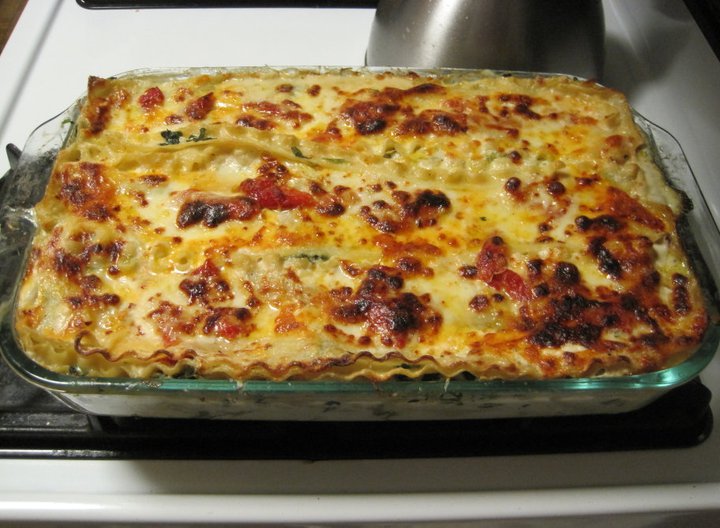
Since we were the biggest cooks in house, we invariably ended up collaborating on meals on some nights and our contrasting cooking styles always made for interesting meals. The entire process was a struggle between us; Tyler would make a suggestion and I would resist because I already knew what I wanted. I would make a suggestion and Tyler would resist because he wanted to see the outcome of what he was doing. We didn’t always listen to each other, but there was usually a shared commitment to accept some input, and typically the meals we created ended up better than either of us could have produced on our own. This night was no different. Tyler sent me a text saying he had spent all day roasting red peppers and was planning on making lasagna that night. How could I resist?
Unfortunately, I don’t have an exact ingredient list for you because Tyler bought most of the groceries and (of course) did not have a recipe while doing it. Here’s what I think we had though:
- 2 boxes of lasagna noodles (one was regular pasta, the other was whole wheat. We preferred the latter.)
- 2 jars of Bertolli alfredo sauce

Tasty, tasty venison.
- 2 frozen chicken breasts
- 1lb of venison steak/cutlets
- 1-2 lbs of mushrooms
- 2 cups of roasted red peppers, cut into strips (if you have homemade, god bless you)
- 20 oz. frozen spinach, thawed (I normally dont like frozen spinach, this turned out quite well.)
- 2 logs of fresh mozzarella
- 1 tub of ricotta cheese
- Wedge of parmasean and/or asiago
- Fresh basil
- Red pepper flakes

We pre-prepared everything so we could just bake the lasagnas long enough to melt everything together and not have to worry about uncooked meat. The chicken breasts were boiled in a heavily seasoned (salt, pepper, garlic powder, sage, rosemary and thyme) pot of water, then diced into small peices. After that, we tossed them with the liquid left in the jar from the roasted peppers to add another layer of flavor. Note: while the boiling liquid smelled fantastic, I don’t think enough of the flavor trasnferred. You might be better off brining and roasting them. Alternately, you could use chicken thighs which usually have more flavor. The venison was already sliced into medallions, about 1/4 to 3/8 inch thick. We patted them dry, seasoned with salt, pepper, garlic & herb, and chili powder, then seared them in a very hot pan with a teaspoon or two of canola oil. By the time they are well browned on both sides, they should be done. Then cut them into matchstick peices so they can be sprinkled throughout the layers. Lastly, the mushrooms were cooked with some butter, garlic and seasonings. Just make sure you get a good amount of the moisture out so it doesn’t come out in the lasagna itself. One thing we forgot to do: the recipe we were loosely consulting suggested mixing the ricotta with an egg, then mixing the spinach into that. I think that process would have helped hold the lasagna together a bit better when it came time to serve.
Put all the various ingredients into some bowls so you can put together the lasagna via assembly line. First layer was alfredo sauce and a small amount of spinach. Then noodles. The next layer was meat(one lasagna was chicken and the other was venison), spinach, mozz, roasted peppers, shrooms. Then noodles. Then sauce, ricotta, and spinach. Then noodles. Then meat, spinach, mozz, roasted peppers, shrooms. Maybe a littlle sauce too (this was hardly a scientific process). Then noodles. Then sauce, ricotta, spinach, red pepper flakes, and some chiffonaded basil, then some shredded parm/asiago. Then the last layer of noodles. Top layer is some sauce, spinach, peppers, and a larger amount of mozz than you had been using. I really tried to cover the top layer in mozz so it would broil up well, then topped with some more shredded parm. Spray some aluminum foil with cooking oil, then cover the lasagna with it. Throw the lasagna in an oven preheated to 350 degrees. After 15 minutes, remove the aluminum foil and let it go for another 25 minutes in the oven. Depending on how crusty and brown you like the cheese, you may have to finish it under the broiler, which is what we did. Let it sit for 10 minutes, then furiously devour it.
I never liked Italian food growing up, which caused friction with my brother Allen who I think would have been content to eat Spaghetti every single night. As my palate has matured I have realize that I didn’t dislike Italian food, I disliked poor impersonations of Italian food. What I mean by that is mushy spaghetti, topped with canned tomato sauce, and maybe some overcooked and unseasoned ground beef. Yuck
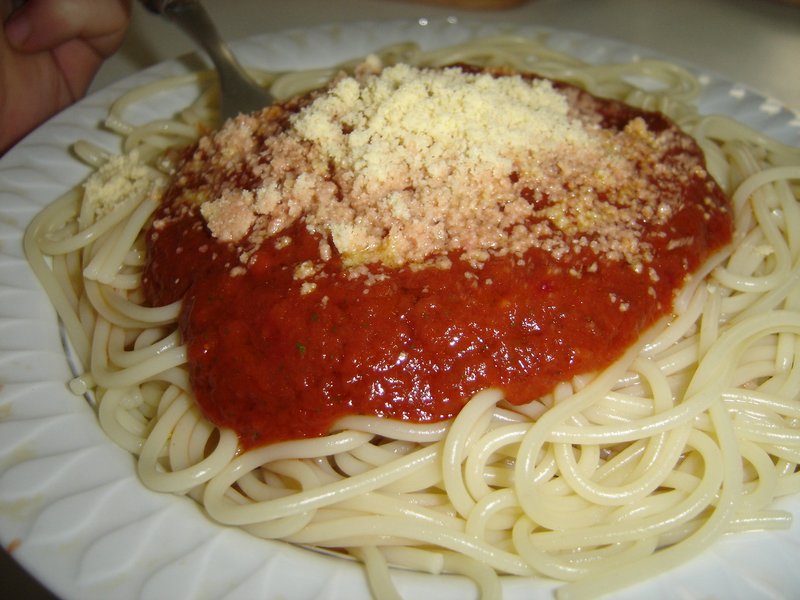
This is the crap I'm talking about...
. But properly done Italian food? Fantastic. I especially like the recipes which bubble away for hours, letting the flavors mingle and making your kitchen smell so damn good that you can’t resist stealing some of the food before it’s done.
The basis of this recipe came from my America’s Test Kitchen cookbook. Btw, if you are unaware of the ATK cookbooks/TV show or Cook’s Illustrated magazine, you should really check them out. It’s a wonderful organization. They test endless variations of each recipe they publish to find the very best methods, and they also test kitchen equipment and common ingredients to tell you the best ones to buy. Anyways, in this particular instance I thought their recipe was a bit too simple, so I added a few things to make it more interesting. You will need:
- 1.5-2 lbs of beef short ribs or pork bone-in country ribs
- 1 tbsp light olive oil
- 1 onion, diced
- 1 shallot, thinly sliced
- 1/2 cup dry red wine
- 28 oz. of canned diced tomatoes (look for Muir Glen Organic. They won the ATK taste test of canned diced tomatoes.)
- 1 tbsp fresh oregano, minced
- 3-4 cloves garlic, peeled and lightly crushed (you want these left whole, so you can take them out after stewing)
- 1 bay leaf
- salt and pepper
- 1 lb of pasta (the book recommends tubular pasta like a rigatoni or penne)
Pat the ribs dry, then season with salt and pepper. Heat the oil in a 12 inch skillet over medium-high heat until just smoking. Brown the ribs, about 10 minutes, then transfer to a plate. Pour off all but 1 teaspoon of the fat in the skillet (I poured it all out and replaced it with some bacon fat from the fridge. I think it added a nice smoky background flavor.) Add the onion and shallot to the skillet and cook over medium heat until softened, about 5 minutes. Stir in the wine and simmer, scraping up any browned bits, until the wine has reduced to a glaze, about 2 minutes.
This is another spot where I differed from the recipe, either because I didn’t have the right size pan or because I leaned more towards the 2lb range in terms of meat. Either way, instead of returning the meat to the skillet, I transferred the meat and wine/aromatics to a large pot, about the size of a dutch oven. Â Don’t forget to add any juices which might have come out from the meat while it was resting; that’s good flavor. Then add in the tomatoes and juice, plus the garlic cloves, bay leaf and oregano. Bring the sauce to a boil, then reduce the heat to low, cover and simmer gently for 1.5 to 2 hours, turning the ribs occasionally until the meat is tender and falling apart. That is the real test of done-ness, when I made this I let it go for 2.5 hours and the meat was shreddable but still just a bit tougher than I would have liked.
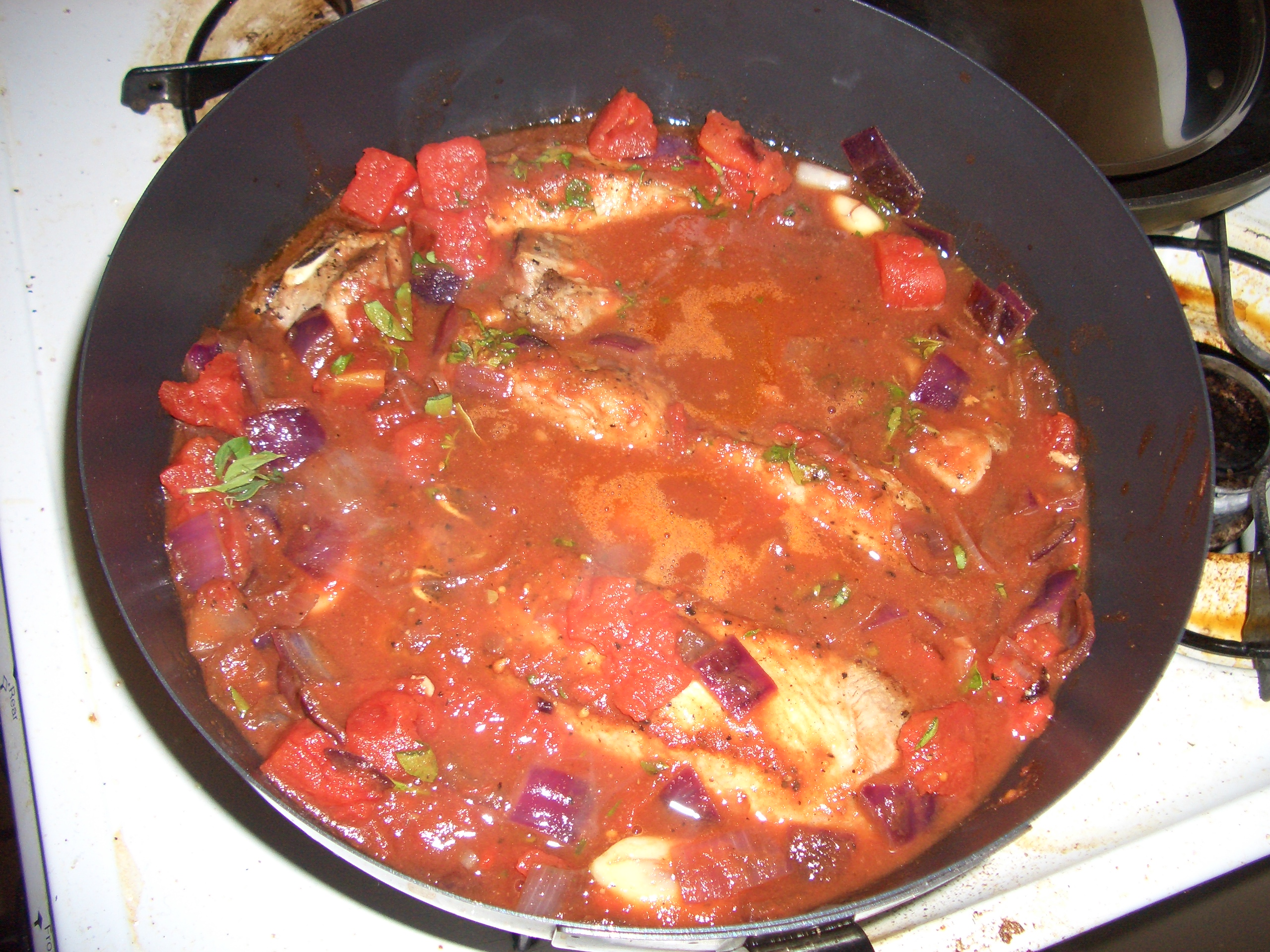
Right before the cover goes on.
Using a slotted spoon, remove the meat from the sauce and let cool. Shred the meat and discard the bones and any chunks of fat you find. You’ll also want to remove the garlic cloves and bay leaf. Return the shredded meat to the sauce and continue to simmer over medium heat for another 5 minutes or so to re-heat the ribs and thicken the sauce a bit. Season with salt and pepper to taste. When tossing with pasta, add some of the pasta water if the sauce needs to be thinned out a bit. For a garnish, I shredded some parmesan and sprinkled some chiffonaded basil leaves, but really this can stand on its own. One last note: to get a gentle simmer (1-2 bubbles per second as the book describes it) I had to turn my stove down as low as it could go, until the flame was almost turned off. So it might take some fiddling to get the heat just right.
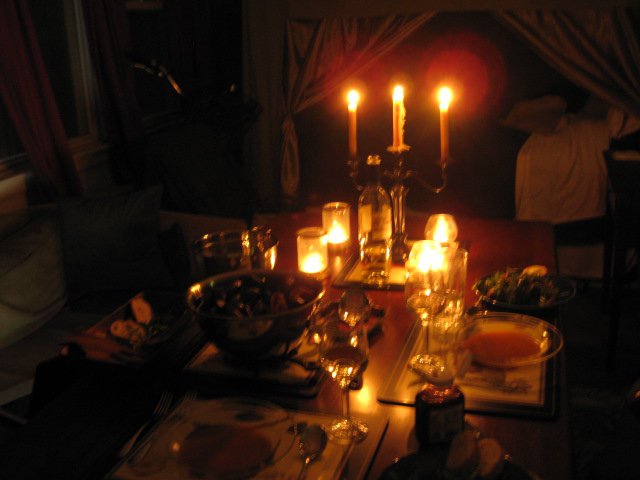
Note the bowls of deliciousness for dipping bread.
This post is a throw back to Valentine’s Day. Yes, it’s been almost two weeks, but the cooking Meg and I got up to was so good I have to recall to this ancient history and write about it.
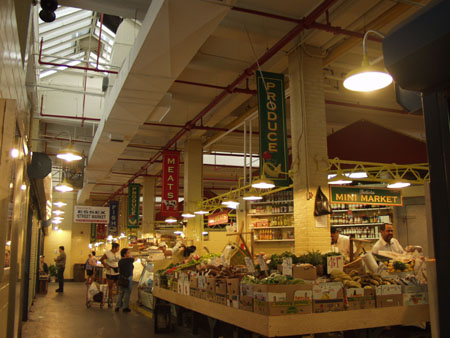
Essex Market
 A few weeks before V-day, after grabbing brunch with friends at the Essex Cafe in the Lower East Side, we swung into the Essex Market. The Essex Market is a combination of a super market, a farmers market, and random food boutiques (including cheese!). Actually, the market probably deserves a return trip and a post of it’s own. But I digress. As we were walking around the market, passing a 1pm beer party at the butcher station, we ran across the seafood area and saw them: bags of mussels for $2.50 a pound. I think that it must be the landlocked Midwesterner in me but I just always assume that any protein coming out of the ocean is going to be expensive.  Whenever I realized how wrong I am my head starts racing with culinary schemes. But since mussels don’t live long and we already had dinner planned we decided to wait on tasty denizens of the sea.
But then, the Friday before Valentine’s, Meg went out to lunch with an old boss and saw Angry Mussels on the app menu. She didn’t try them there, but was inspired for an at-home go.
As it seems with many things, I’m wasn’t happy with name other people gave this dish and decided that I was going to start calling them the Devil’s Mussels or Devil Mussels instead of Angry Mussels. I mean mussels aren’t like bears, they can’t look angry! And, with the spicy ingredients, the Devil’s Mussels is a fitting name.
The first thing we had to do was get mussels, and finding them at Whole Foods for $5 for a 2 pound bag we just had to get two of the 2 pound bags. That’s right, 4 pounds of mussels for two people. Bring it on!
The next step is cooking the mussels. We decided to go with steaming, which is super easy! First you make a tasty liquid mixture in a big pot. (You don’t need much liquid – only an inch or two.)  In the case of the Devils Mussels, we put together
- 1 cup white wine
- 5 teaspoons chili pepper oil
- 3 teaspoons chili pepper powder
- 2 teaspoons minced garlic
- Half of an onion, chopped
- Juice of one lemon
Ideally you want something to keep the mussels out of this liquid a steaming basket or even some tin foil rolled up an place in the bottom of the pot will do. Still, for some reason, we diced to skip this step and our mussels turned out just fine (just a few had a slightly overly rubbery texture). All you need to do is get the flavor packed liquid up to a boil, rinse the mussels and set them in the pot to steam for five minutes: until the little guys open up. In our case, because of the heroic 4 pounds of mussels and a not-so-heroically-sized pot, after 5 minutes a lot of the mussels weren’t open. But after some careful stirring and another 5 minutes, all of them gave in to the steam and opened up their shells. After they’re done cooking you’ll need a big bowl to put them and a another big bowl (or a smaller bowl for each person) to put the shells in.
These mussels have a great spicy kick that live up to whatever name you call them by. Once you start eating them you just can’t stop. Between Meg and I, we managed to put down all 4 pounds (not as crazy as it sounds given the shells, but still a lot of eating).  One final thing you’ll need is a good baguette.  If you cook mussels right, you’ll have a bunch of tasty liquid you’ll want to sop-up!
Yesterday, taking advantage of an extended restaurant week menu, Meg and couple fellow Cardozo students headed to Fishtail–the restaurant where Meg first saw the Angry Mussels on the menu. I was lured in by oysters, but Meg got the mussels and let me try some. Interestingly, these mussels were dry roasted, not steamed. They didn’t pack the level of spice we had enjoyed in our home made version, but they had a great delicate lemon flavor that let the briny mussel tasty shine through. This has given us a some more great mussel ideas: somehow we are going to get some of these bad boys on the grill this summer and next time we steam, the amount of lemon juice is going get kicked up.
All in all, mussels are an incredibly easy do-it-at-home seafood meal where you can eat yourself silly for the price you would pay for a small mussel appetizer at a restaurant.
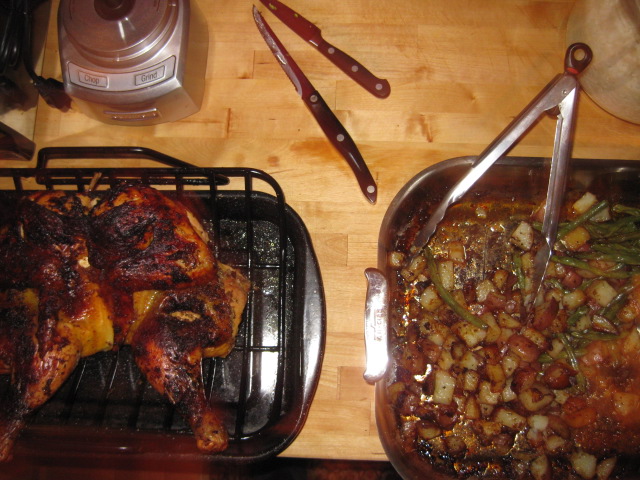
YummmmTasty potato and green bean closeup!
OK, so this dish is not officially named “Butterfly Chicken” but that’s what Arthur and I call it because that is the verb for when you cut out the chicken’s backbone, break the breastbone, and lay it flat, “to butterfly a chicken” – it looks sort of like a butterfly. I think the official name is “Balsamico Roast Chicken” (it comes from The Italian Country Table, by Lynne Rossetto Kasper).
I have been talking about purchasing a dining table since at least August and with my 30th birthday fast approaching, I decided to finally go for it – let’s face it, who wants to be 30 and admit that they eat all of their meals on the sofa? (Although, now that we have the table, Arthur still seems to prefer the sofa…)
To break in the new table we decided to call upon our good friend Debbie, some excellent board games, and this classic recipe – who doesn’t love a whole chicken with potatoes roasted in the bottom of the pan? We started out the evening with a bottle of white wine while Debbie prepped a delicious salad (arugula, walnuts, cranberries, goat cheese, prosciutto, with balsamic fig dressing) and I got the chicken going. Dinner guests always seem impressed by a whole roasted bird (even though it’s not much work!) and this recipe smells great cooking, cooks more quickly because of the butterfly technique and has never come out dry because of all of the delicious extra fat from the pancetta. If anything, Arthur, if asked, will warn you not to get over-zealous with the pancetta. We tried bumping up the pancetta amount one time (’cause we love it so much) and it just turned out waaaay too greasy – and you know it was reeeeeally greasy if we’re saying that…
[DDET Click Here for the Balsamico Roast Chicken and Potatoes Recipe]
from The Italian Country Table by Lynne Rossetto Kasper
Ingredients:
¼ medium onion                                                        4 slices (1 ½ to 2 ounces) pancetta, chopped
3 large garlic cloves                                                    5 Tablespoons balsamic vinegar
¼ tightly packed cup fresh basil leaves                     1 Tablespoon extra-virgin olive oil
½ teaspoon dried basil                                                           Salt and freshly ground pepper
¼ teaspoon each dried oregano and marjoram          ½ to 1 cup dry white wine
1 3 ½- to 4-pound chicken                                        Parsley or fresh thyme for garnish
6 medium Yellow Finn, Yukon Gold, or
red-skinned potatoes, scrubbed and cut
into 2-inch chunks
- If time allows, season the chicken ahead and refrigerate it several hours or overnight. Preheat the oven to 400˚ F when ready to cook the chicken. Mince together, by hand or in a food processor, the onion, garlic, herbs (dried ones could be in here too), and pancetta. Then blend in 2 teaspoons of the balsamico, the oil, and salt and pepper to taste.
- Cut out the chicken’s backbone and open the chicken out flat, skin side up. With your palm, firmly press down the breast area to flatten. Stuff most of the herb mixture under the skin of the thigh, leg and breast areas. Rub the rest all over the chicken. Place the bird skin side up on a large shallow pan (a broiler pan or jelly-roll or half0sheet pan). Scatter the potatoes around it and sprinkle everything with salt and pepper.
- Roast 20 minutes, then pour in ½ cup wine. Roast another 70 minutes, or until the thigh reaches about 175˚ F on an instant-read thermometer. Baste the potatoes and chicken frequently with the pan juices, turning the potatoes often to brown evenly and prevent them from sticking. Add more wine if the pan is dry. Turn over the chicken two thirds of the way through cooking for even browning.  If after an hour of roasting, the chicken isn’t browning, raise the heat to 500˚ F to finishing cooking. (Or wait until it is done and run it under the broiler 5 minutes to crisp the skin.)
- Let the chicken rest 5 to 10 minutes at room temperature, then present on a warmed platter along with the potatoes, sprinkling everything with the rest of the balsamic. Garnish with bouquets of parsley or fresh thyme.
[/DDET]
Once you have started pre-heating the oven to 400, I recommend starting by rinsing and chopping the red potatoes into roughly 1 inch cubes (the recipe says 2 inches, but if you want to make sure they’re fully cooked and get nice and crispy on the outside, 1 inch is best in my experience). Toss your potato cubes in a large bowl with some olive oil, salt, pepper, dried basil, marjoram, and oregano. Then use olive oil to grease the bottom of your roasting pan and throw those spuds in there. Next, prepare the “stuffing” according to the recipe- it’s not technically stuffing, because it’s going to go under and over the skin, not actually inside the bird, but that’s what I call it.
When your pan and your stuffing are ready, grab your whole “roaster” chicken and a sharp knife… and cut out the back bone! Yep, cut the whole. thing. out. If you are squeemish, you can have the butcher do it for you at the grocery store, but it’s really not that hard. (Plus, think how proud of yourself you’ll be if you do it yourself! It’s a task that always makes me feel like a real chef). Just set that c
hicken up so it’s sitting on the counter facing away from you and make 2 cuts, one down each side of the backbone from neck to tail.  Then, throw out the backbone (unless you want to save it for making stock). Lay the chicken down flat on the counter, breasts up, and press your thumbs down on the breastbone until you hear a snap – now the chicken will lie flat in a “butterfly” position. It cooks quicker this way and still looks really cool.
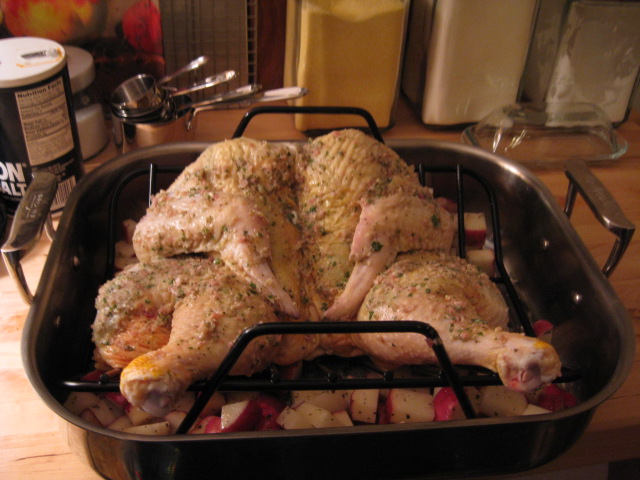
Ready for the oven...
Putting the stuff under the skin is fun, but be sure not to get carried away: you’ll want to save some to pat onto the outside of the skin (Arthur likes to be sure to pat it on, trying to rub it in does not seem to be as effective). Finally, put your chicken in the roasting pan (on the rack, above the potatoes). Roast in the oven for 20 minutes, then pour 1/2 coup of white wine over the chicken and potatoes. After, roast for another 70 minutes (or however long it takes for the chicken to finish roasting), basting every 20 minutes, or so.
Check to see that the chicken is fully cooked by slicing the thickest part of the thigh or breast with a knife and making sure the juices are running clear. Then lift the chicken on its rack off of the pan, and let it “sit” for another 20 minutes or so while you jack the oven up to 50o degrees and finish giving those potatoes a nice crisp finish. (This dish tastes great with green beans, too. Just add them to the bottom of the pan with the potatoes for the last 40 minutes to an hour of cooking time).
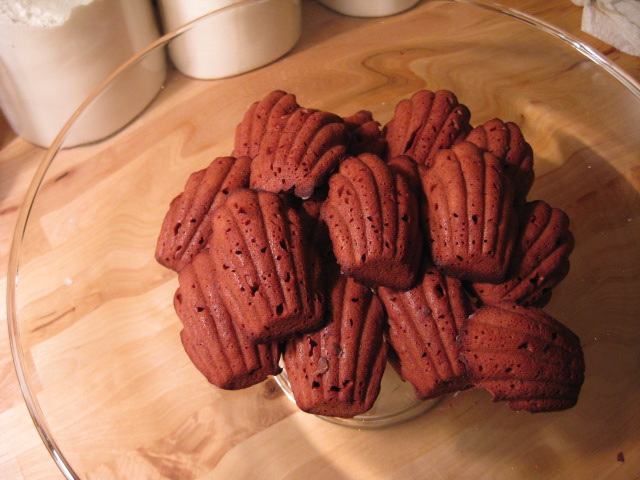
Thanks, Debbie!
My new table is now officially broken in.
Easy! Delicious! Impressive!
(If you’re lucky enough to have Debbie joining you for dinner, she might just bring some homemade chocolate madelines with ice cream to finish off the meal…)



ABOUT
Good Food, Good Drink, Great Living
RECENT POSTS
| M | T | W | T | F | S | S |
|---|---|---|---|---|---|---|
| 1 | 2 | 3 | 4 | |||
| 5 | 6 | 7 | 8 | 9 | 10 | 11 |
| 12 | 13 | 14 | 15 | 16 | 17 | 18 |
| 19 | 20 | 21 | 22 | 23 | 24 | 25 |
| 26 | 27 | 28 | 29 | 30 | 31 | |
Tags
Archives
- November 2014 (1)
- October 2014 (2)
- September 2014 (1)
- April 2014 (1)
- March 2014 (1)
- February 2014 (1)
- January 2014 (1)
- December 2013 (4)
- November 2013 (2)
- October 2013 (1)
- September 2013 (1)
- August 2013 (4)
- July 2013 (4)
- June 2013 (6)
- April 2013 (5)
- March 2013 (5)
- February 2013 (1)
- January 2013 (3)
- December 2012 (2)
- November 2012 (13)
- October 2012 (4)
- September 2012 (6)
- August 2012 (3)
- July 2012 (4)
- June 2012 (6)
- May 2012 (10)
- April 2012 (13)
- March 2012 (5)
- February 2012 (5)
- January 2012 (2)
- December 2011 (16)
- November 2011 (8)
- October 2011 (10)
- September 2011 (10)
- August 2011 (12)
- April 2011 (2)
- March 2011 (8)
- February 2011 (7)
- January 2011 (7)
- October 2010 (5)
- September 2010 (8)
- August 2010 (12)
- July 2010 (5)